
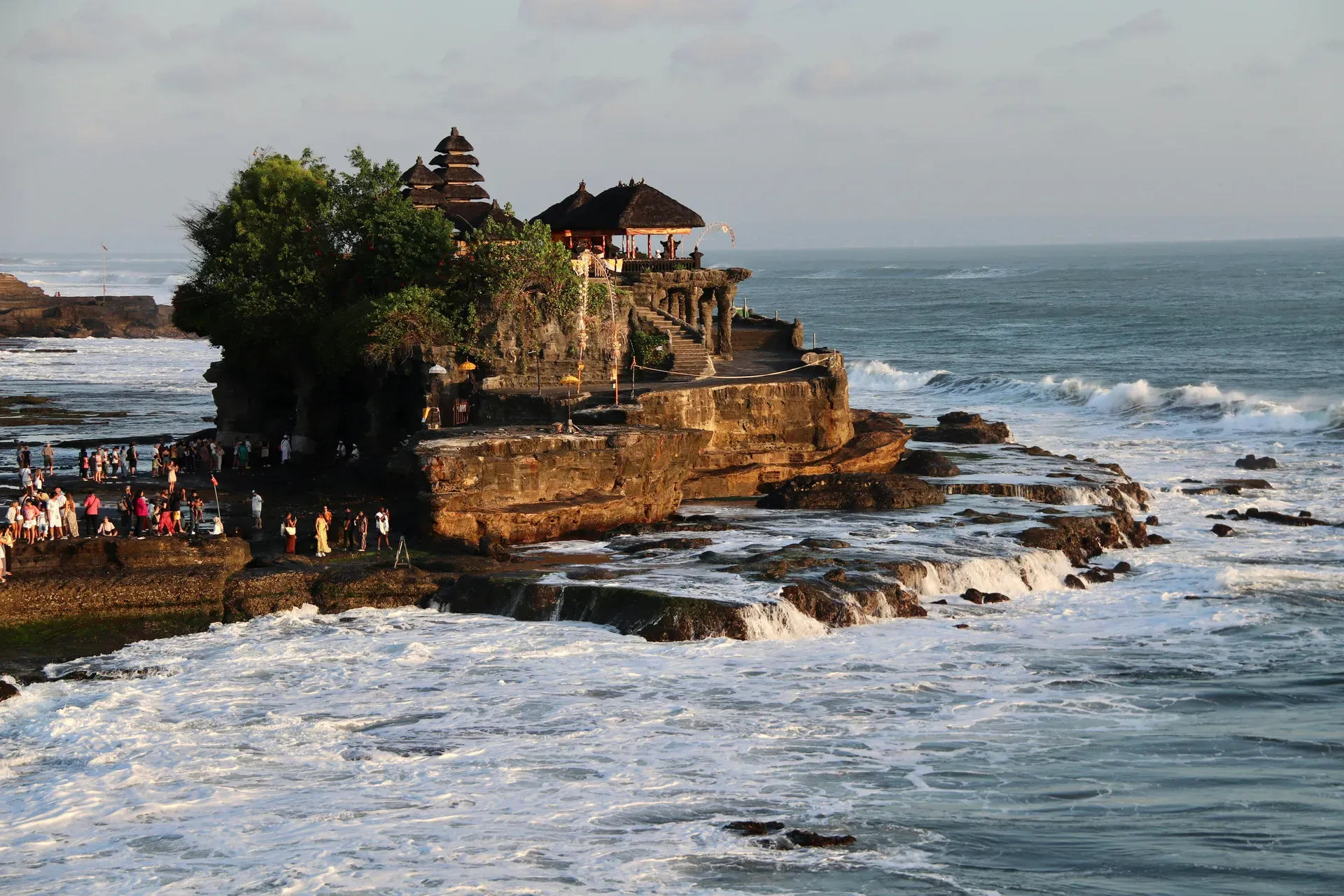
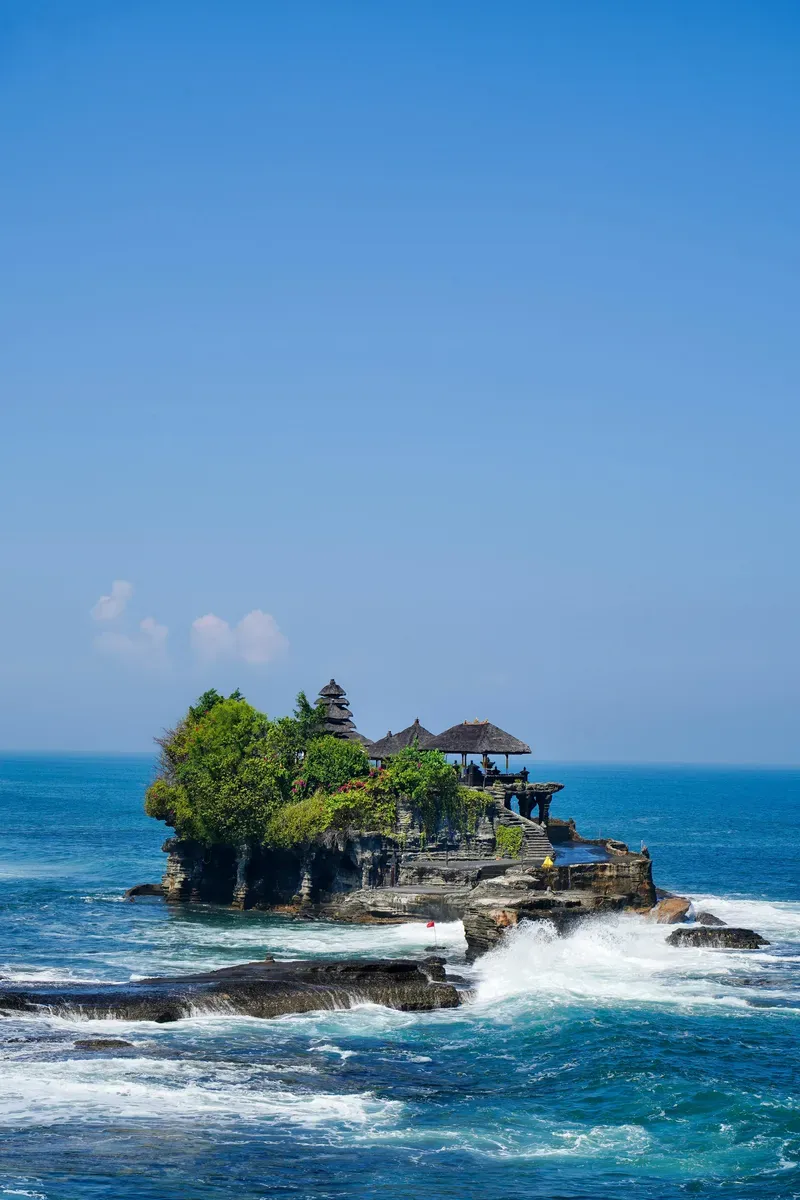
Founded in the 16th century, Tanah Lot is a Hindu shrine perched on a 3-hectare rock formation just 20 meters off the southwest coast of Bali. At high tide, the temple appears to float above the Indian Ocean, drawing 500,000 annual visitors for its dramatic sunset views and sacred freshwater springs.
Find Guided ToursTanah Lot is an ancient Hindu shrine situated on a three-hectare coral rock formation off the southwest coast of Bali. Located in Beraban Village within the Tabanan Regency, the temple sits 20 meters from the shoreline at an elevation of 17 meters above sea level. It is widely recognized for its floating appearance during high tide and its striking silhouette against the Indian Ocean, drawing an average of 500,000 visitors annually.
The site functions as an active place of worship and a major pilgrimage destination dedicated to the sea gods. It holds a critical place in Balinese Hinduism as one of the island's seven sea temples, or Pura Segara. These structures were built along the coast to create a spiritual chain intended to protect Bali from evil spirits originating in the ocean. Today, it ranks as the most photographed temple on the island.
High priest Dang Hyang Nirartha founded Tanah Lot in the 16th century. During his travels, he was inspired by the site's natural beauty and established the location as a sanctuary for worship. For centuries, the temple remained a purely natural coral structure enduring the crashing waves.
By the 1980s, the rock face had deteriorated significantly and began to crumble. To save the landmark, authorities initiated a massive restoration project funded by an Rp 800 billion loan from the Japanese government. Engineers reinforced the foundation to prevent further erosion, and as a result, approximately 33 percent of the rock formation seen today is artificial.
Discover the full history and cultural significance on our About page.
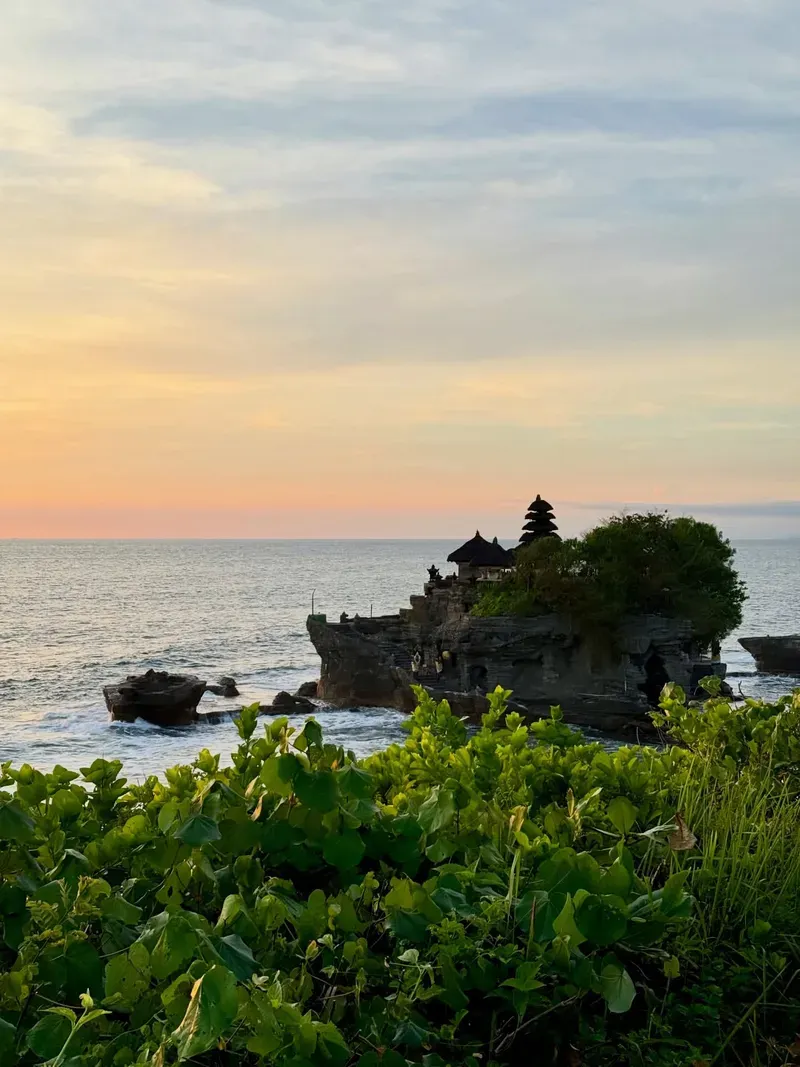
Arrive by 16:00 to secure a viewing spot on the Sunset Terrace or southern cliffs. The 16th-century shrine sits 17 meters above sea level, creating a dramatic silhouette against the Indian Ocean. Visit between April and August for the clearest skies to photograph the 18:15 to 18:45 sunset.
When the tide recedes, walk 20 meters across the exposed sand to the rock's base. Priests administer blessings using water from the Tirta Pabersihan fountain. This natural spring flows directly beneath the sea-surrounded rock formation, providing fresh drinking water despite the surrounding salty ocean environment.
Walk five minutes from the main site to Batu Bolong Temple for the daily Kecak Fire Dance. The performance begins at 18:00 and costs approximately 100,000 IDR. It provides an alternative vantage point to watch the evening sky behind a sister sea temple featuring a natural rock archway.
A small cave at the base of the rock houses banded sea kraits. Balinese Hindus revere these venomous marine reptiles as sacred guardians of the temple. Local keepers handle the snakes, ensuring they remain docile so visitors can safely view them while exploring the lower coral rock formations.
Hand-picked tours with free cancellation and verified reviews
 Free Cancellation
  Free Cancellation
  Free Cancellation 6h
  Free Cancellation 5h
  Free Cancellation
  Free Cancellation
  Free Cancellation
  Free Cancellation
 The optimal time to visit Tanah Lot is from April to August, as these driest months provide the clearest skies for sunset photography. For daily timing, arrive early between 07:00 and 09:00 to avoid massive crowds, or by 16:00 to secure a viewing spot for the 18:15 sunset.
April and May are among the best months to visit. These drier months provide clear skies that are optimal for photographing the temple's dramatic sunset silhouette.
This period falls entirely within the driest season. The weather offers the clearest skies for sunset photography and exploring the 3-hectare coral rock formation at low tide.
Visitors traveling during these months should check local tide charts before arriving. Low tide is the only time you can walk across the 20 meters to the temple base.
January and February are the worst months to visit. The monsoon season brings the heaviest rainfall and highest humidity, limiting the clear skies needed for optimal sunset photography.
Tanah Lot is open daily from 07:00 to 19:00.
| Category | Price |
|---|---|
| Foreign Adult Entrance | 75,000 IDR |
| Car Parking | 5,000 IDR |
| Motorcycle Parking | 3,000 IDR |
| Kecak Fire Dance Performance (Optional) | 100,000 IDR |
Advance bookings are not required. Tickets must be purchased in person at the entrance booth using cash only. Ensure you carry small denominations of Indonesian Rupiah, as the ticket office does not accept cards or digital payments.
For complete schedules and ticket prices, visit our Hours & Fees page.
Tanah Lot is accessible by road from major tourist hubs in southern and central Bali. Visitors typically arrive via rented scooters, metered rideshares, or hired private drivers depending on their starting location.
📍 Beraban Village, Tabanan Regency
Traveling from Seminyak covers a distance of 18 kilometers. Metered taxis or fixed-price ride-hailing applications like Grab and Gojek serve as the most common transport choices. Fares fluctuate depending on the current traffic conditions along the route. Expect the ride to take approximately one hour to reach the temple grounds.
Hiring a private driver is a practical choice when traveling from Ubud, located 35 kilometers away. The listed rate generally covers a half-day hire for the vehicle. Your driver will typically wait in the parking area while you explore the temple complex. The drive takes between one and a half to two hours.
Renting a scooter provides the most flexible transit method for solo travelers and couples. The drive from Canggu spans just 11 kilometers. You pay a standard daily rental rate for the vehicle. Parking at the site costs an additional 3,000 IDR for motorcycles. The ride usually takes 30 to 45 minutes.
Taxis are readily available for the 22-kilometer trip from Kuta to the temple. You can often negotiate a return trip price directly with local drivers to secure transport back. The drive lasts between one and one and a half hours. Car parking at the temple complex requires a 5,000 IDR fee.
For detailed transport options and routes, visit our Directions page.
Sunset typically occurs between 18:15 and 18:45. Plan to arrive by 16:00 to secure a prime viewing spot and avoid heavy traffic. Alternatively, visiting between 07:00 and 09:00 provides a peaceful environment away from the massive evening crowds.
The temple sits 20 meters from the shoreline. You can only walk across the sand to the base during low tide. High tide completely submerges the path, restricting your view to the shore or cliffs. Reviewing a daily tide chart ensures you can access the Tirta Pabersihan spring.
Advance online booking is not available. You must pay the 75,000 IDR entrance fee in person using cash. Bring smaller Indonesian Rupiah notes for the ticket booth, parking fees, and the extensive art market. Many local vendors do not accept credit cards or digital payments.
The rocks surrounding the 3-hectare temple base are sharp and highly slippery. Wear sturdy, non-slip shoes if you intend to explore the lower areas during low tide. Stay vigilant near the water's edge. Large freak waves have previously swept visitors off the rocks.
The walk from the parking area takes 10 to 15 minutes. Visitors must cover their shoulders and knees when exploring the park. While sarongs are not strictly mandatory for the outer grounds, wearing one is a recommended sign of respect. Tourists cannot enter the inner temple sanctum.
There is very little shade across the main viewing areas and paved paths. Heat exhaustion is a genuine risk during the average 1 to 2 hour visit. Bring adequate sun protection and drinking water. April to August offers the clearest skies but also intense direct sunlight.
This sister sea temple sits on a rock featuring a natural archway. It draws smaller crowds for sunset photography and hosts a daily Kecak Fire Dance performance at 18:00.
Serving as the former royal temple of the Mengwi Kingdom, this UNESCO World Heritage site is surrounded by moats. Visitors come to see its distinctive multi-tiered shrines.
These vast UNESCO-protected rice paddies demonstrate the traditional Balinese subak irrigation system. The expansive agricultural terraces provide an excellent example of the island's historical farming practices.
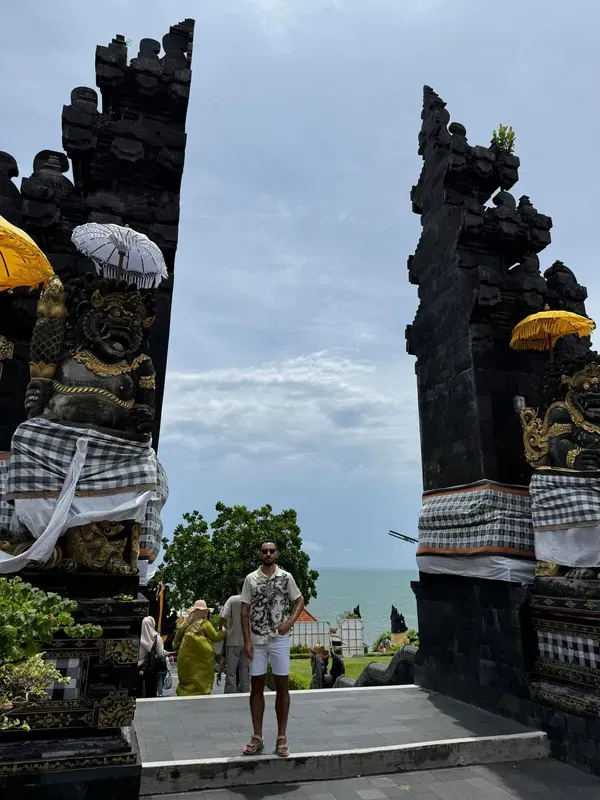
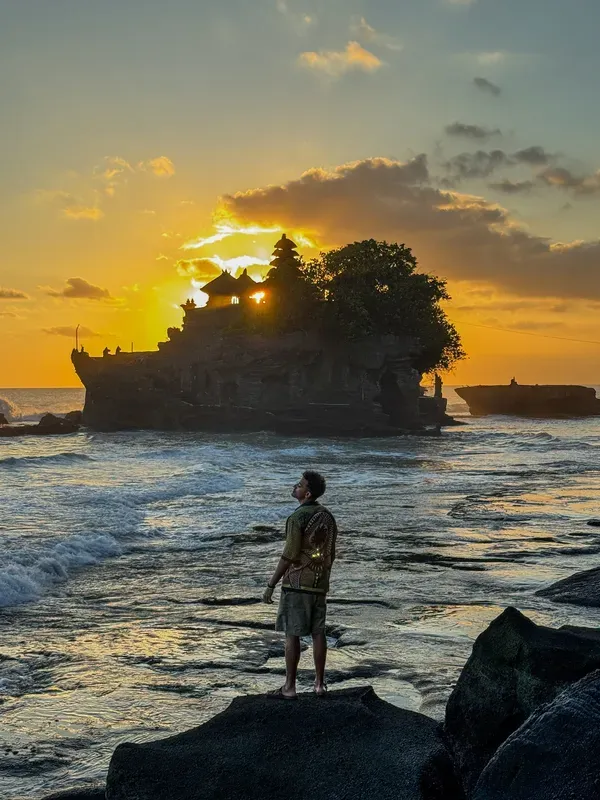
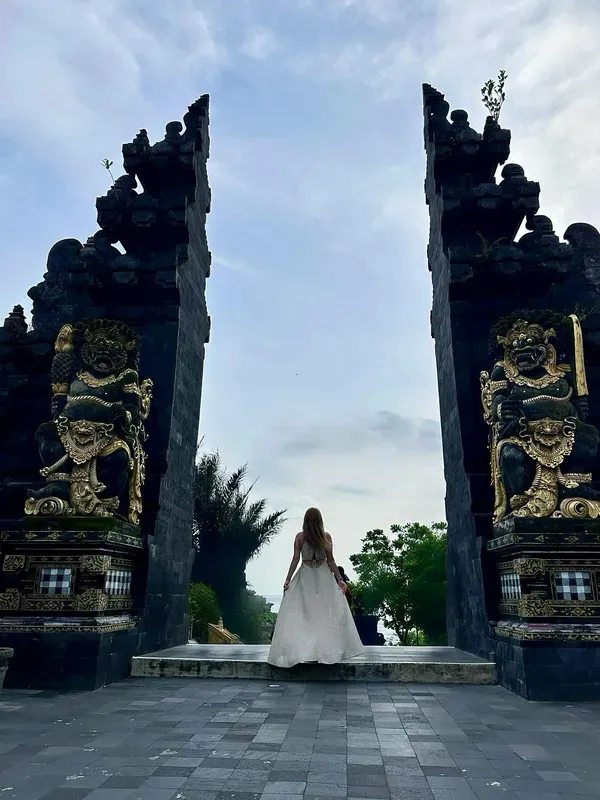
Read what travelers share about their experience visiting Tanah Lot — from practical tips to personal highlights.

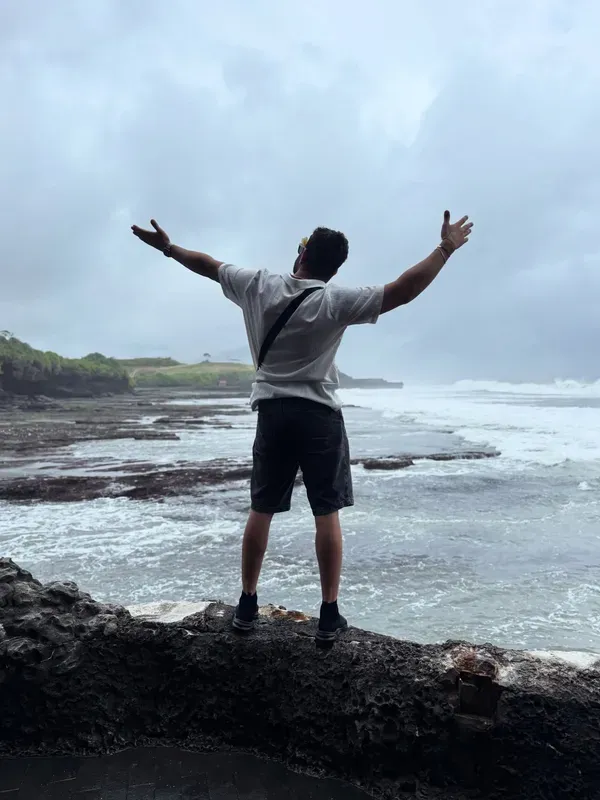
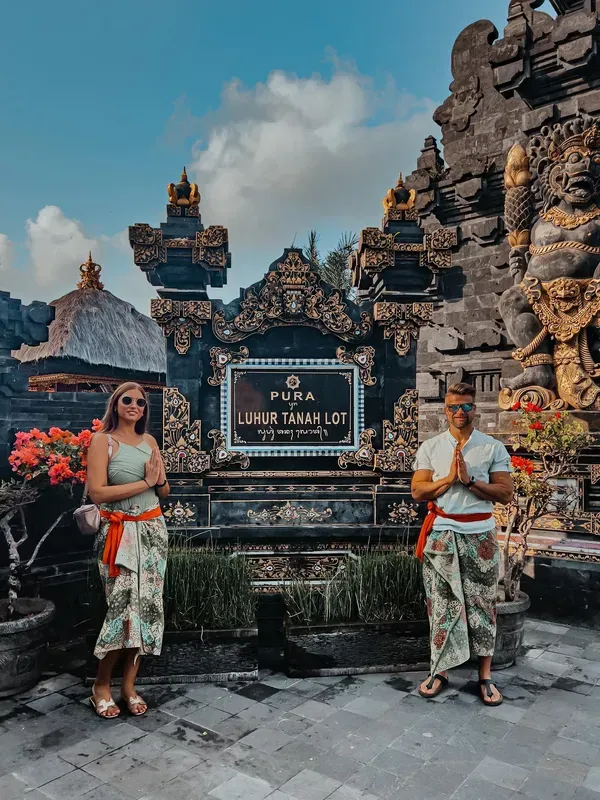
The entrance fee for foreign adults is 75,000 IDR. Tickets cannot be purchased online and must be bought in person at the entrance booth using cash only.
Sunset typically occurs between 18:15 and 18:45. You should arrive by 16:00 to secure a good viewing spot and avoid the heaviest traffic. Alternatively, visiting between 07:00 and 09:00 helps you avoid the massive evening crowds.
You can view the temple from the shore or cliffs during high tide. However, you cannot walk across the 20-meter stretch of sand to the base of the rock because the path will be submerged. Check a local tide chart before visiting if you want to access the base.
From Seminyak, a taxi or rideshare app takes about one hour to cover the 18 kilometers, costing around 120,000 IDR. If traveling from Canggu, renting a scooter is a flexible option that takes 30 to 45 minutes for the 11-kilometer trip.
Modest attire with covered shoulders and knees is expected, though sarongs are not strictly mandatory in the outer park. You should wear non-slip shoes for walking on the rocks and bring small denominations of cash for the 75,000 IDR entrance fee, as cards are not accepted.
The site is partially accessible for wheelchairs. There are ramps leading to the ticket office and paved, relatively flat paths through the 3-hectare park and viewing areas. The beach and the rocky base of the temple are not accessible.
No, tourists are not permitted to enter the inner temple sanctum. This area is strictly reserved for Balinese Hindu worshippers. Visitors can only explore the surrounding grounds, the park, and the base of the 17-meter high rock during low tide.
Yes, a Kecak Fire Dance is performed daily at 18:00 near the Batu Bolong Temple, which is a 5-minute walk from the main site. Tickets for the performance cost approximately 100,000 IDR.
Browse verified tours with free cancellation and instant confirmation.
Find Tours