
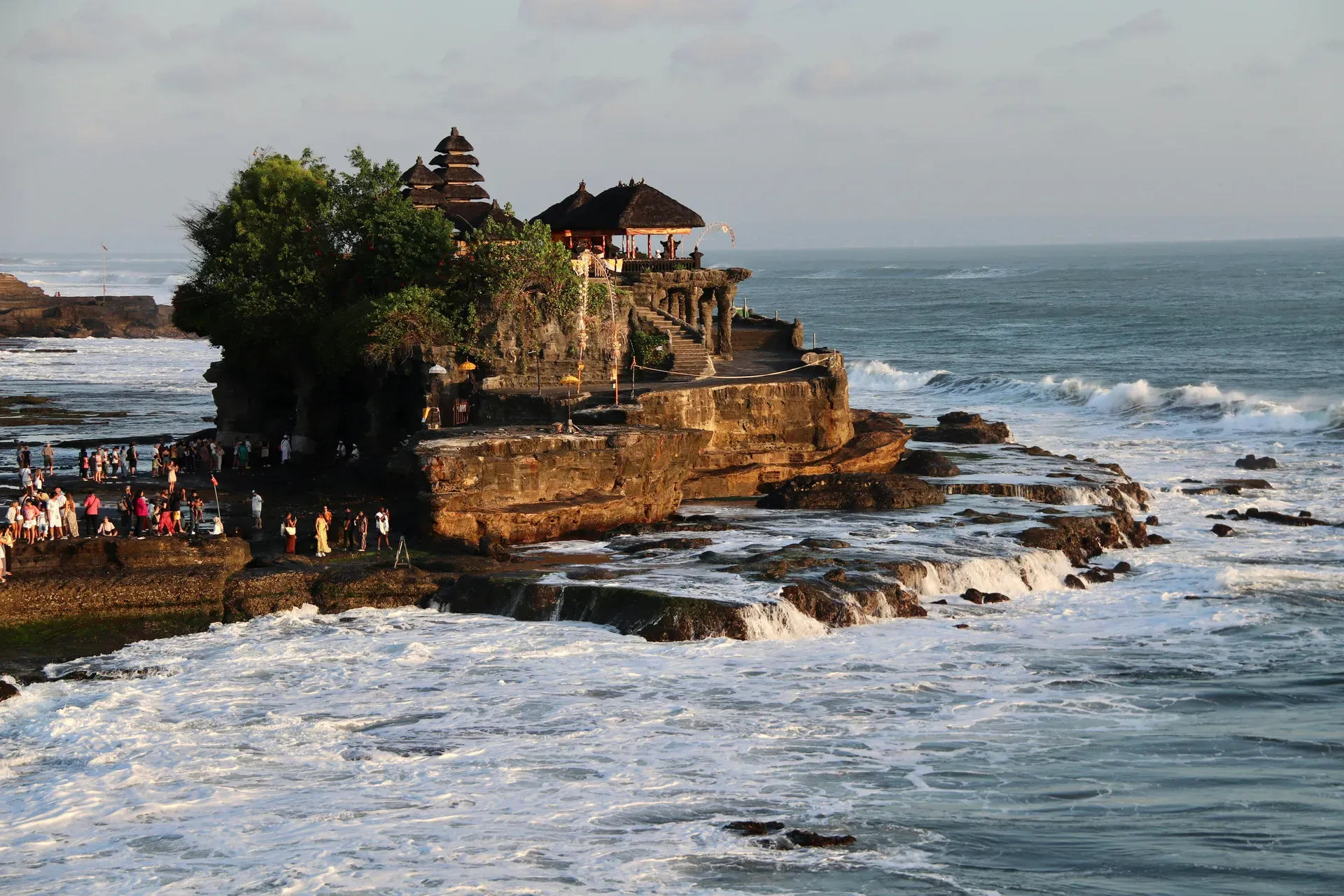
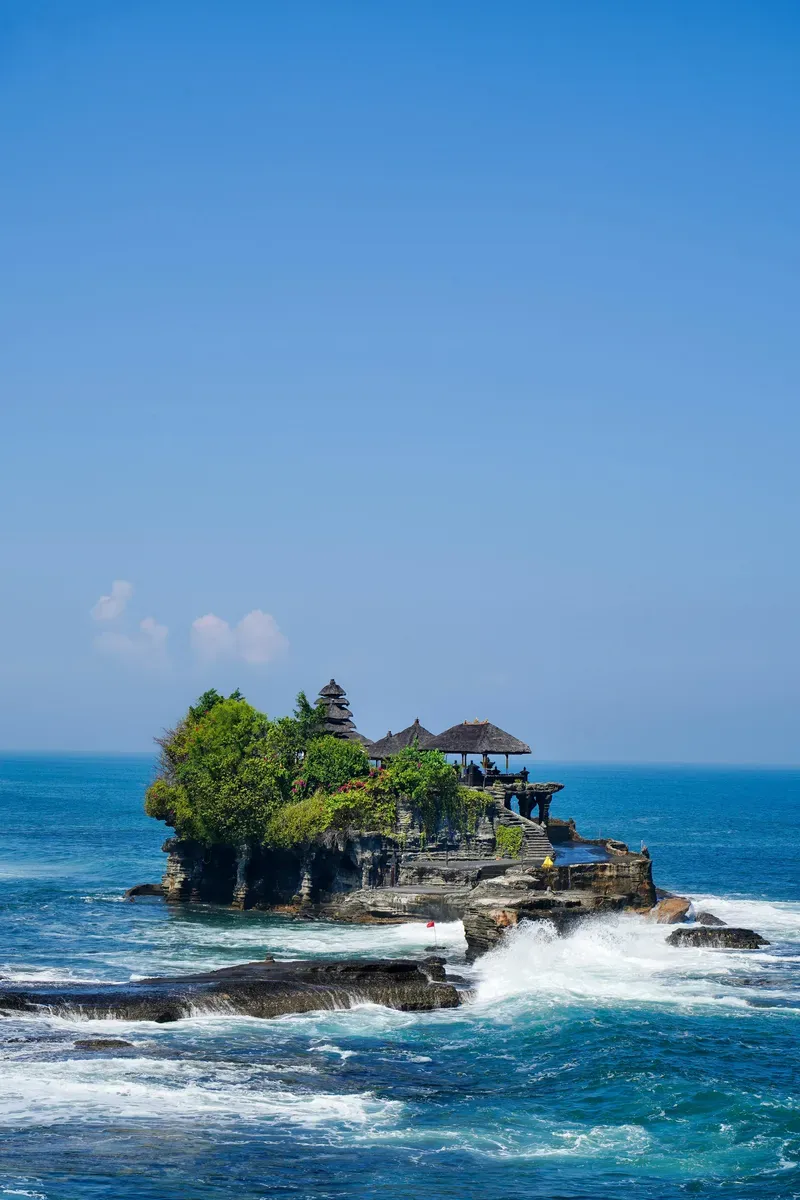
Sixteen meters above the Indian Ocean, a 16th-century Hindu shrine balances on a three-hectare coral rock formation. Tanah Lot anchors the southwest coast of Bali in Beraban Village, drawing pilgrims and tourists to its tide-swept base.
Sixteen meters above the crashing Indian Ocean, a Hindu shrine balances on a three-hectare coral rock formation. Tanah Lot anchors the southwest coast of Bali in Beraban Village, standing 20 meters from the shoreline. High tide submerges the sandy land bridge, cutting the temple off from the mainland and creating the illusion of a floating sanctuary. Low tide exposes a rocky path, allowing visitors to walk directly to the base of the cliff. The site operates daily from 07:00 to 19:00, requiring a 75,000 IDR cash entry fee at the main gate.
Balinese Hindus revere the site as a primary member of the seven sea temples, known as Pura Segara, built to defend the island from malevolent ocean spirits. Pilgrims travel here to pray to the sea gods, while half a million tourists arrive annually to photograph the black-tiered pagodas silhouetted against the setting sun. Reaching the site requires navigating Bali's congested southern roads. A scooter ride from Canggu covers 11 kilometers and takes 45 minutes, while a taxi from Seminyak spans 18 kilometers and costs around 120,000 IDR. Drivers from Ubud charge roughly 350,000 IDR for a half-day hire to cover the 35-kilometer journey. They wait in the massive parking lot, which charges 5,000 IDR for cars and 3,000 IDR for motorcycles.
Visitors face specific environmental challenges depending on the season. April through August provide the driest conditions and clearest skies for photography. January and February bring heavy monsoon rains and high humidity, frequently obscuring the sunset and making the rock surfaces dangerously slick. Freak waves routinely strike the base of the temple, posing a risk to anyone standing too close to the water's edge. Check local tide charts before arriving, as the crossing is strictly impassable during high tide. Early morning visits between 07:00 and 09:00 bypass the massive sunset crowds and offer a quieter experience.
The layout of the complex forces all arrivals to walk through an extensive commercial zone before seeing the ocean. This 10 to 15-minute walk from the parking lot passes dozens of warungs selling coconuts and fried rice. The paved paths accommodate elderly visitors and strollers, making the upper park highly suitable for children. Strict supervision is required near the cliff edges, as the drop-offs lack safety railings in several sections. Carry small denominations of Indonesian Rupiah, as the ticket booth and most market vendors reject credit cards and digital payments.
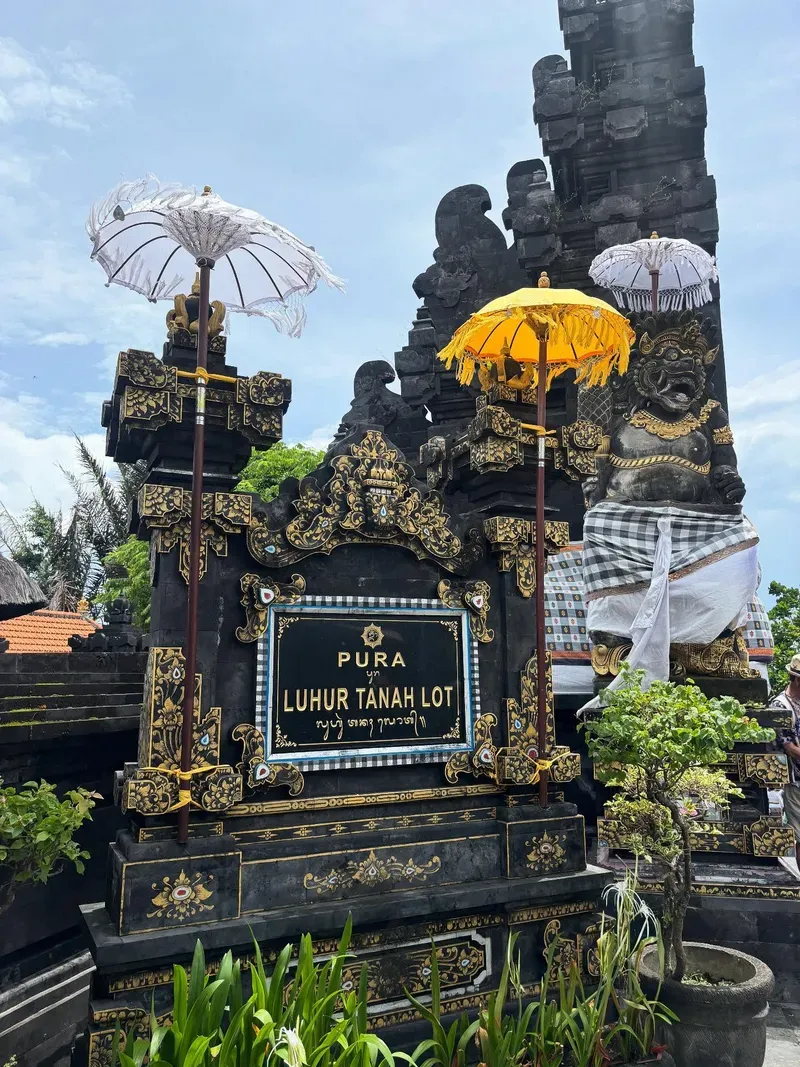
High priest Dang Hyang Nirartha established the sanctuary in the 16th century during his travels along the southern coast. He saw the rock island, known locally as Gili Beo, and instructed local fishermen to build a shrine honoring the sea god Dewa Baruna. The fishermen initially resisted the outsider's demands. Nirartha reportedly shifted the massive rock into the sea using his spiritual power to prove his authority. He then transformed his sash into a venomous sea snake to guard the newly formed island, establishing a lineage of reptilian protectors that locals believe still inhabit the caves today.
The temple functioned as a primary spiritual center for the Tabanan Kingdom for four hundred years. Priests conducted daily rituals, and villagers maintained the thatched roofs of the meru towers. The isolation of the rock provided natural defense, but it also exposed the structure to extreme weather. Centuries of relentless ocean waves eroded the porous coral foundation. By the 1980s, the rock face began to crumble, threatening to collapse the entire structure into the sea. The Indonesian government intervened, recognizing the site's economic value as tourism rapidly expanded across Bali.
Officials secured an Rp 800 billion loan from the Japanese government to fund a massive engineering project. Construction crews reinforced the crumbling base with artificial rock, carefully sculpting and painting the concrete to match the natural coral. They installed massive tetrapods beneath the water surface to break the force of incoming waves before they hit the cliff. Today, approximately 33 percent of the island is man-made. The restoration saved the temple but permanently altered its geological authenticity. The World Monuments Fund monitored the project, noting the delicate balance between preserving a religious site and maintaining a major tourist attraction.
The site remains an active place of worship despite the heavy tourist presence. Every 210 days, thousands of Balinese Hindus descend on the temple for the Piodalan anniversary. Worshippers crowd the pathways, carrying tall offerings of fruit and rice on their heads. Tourists should avoid visiting on these specific festival days unless they intend to observe the religious rites, as the sheer volume of people makes moving through the complex difficult. Check the Balinese Pawukon calendar before booking a driver, as the exact dates of Piodalan shift each year.
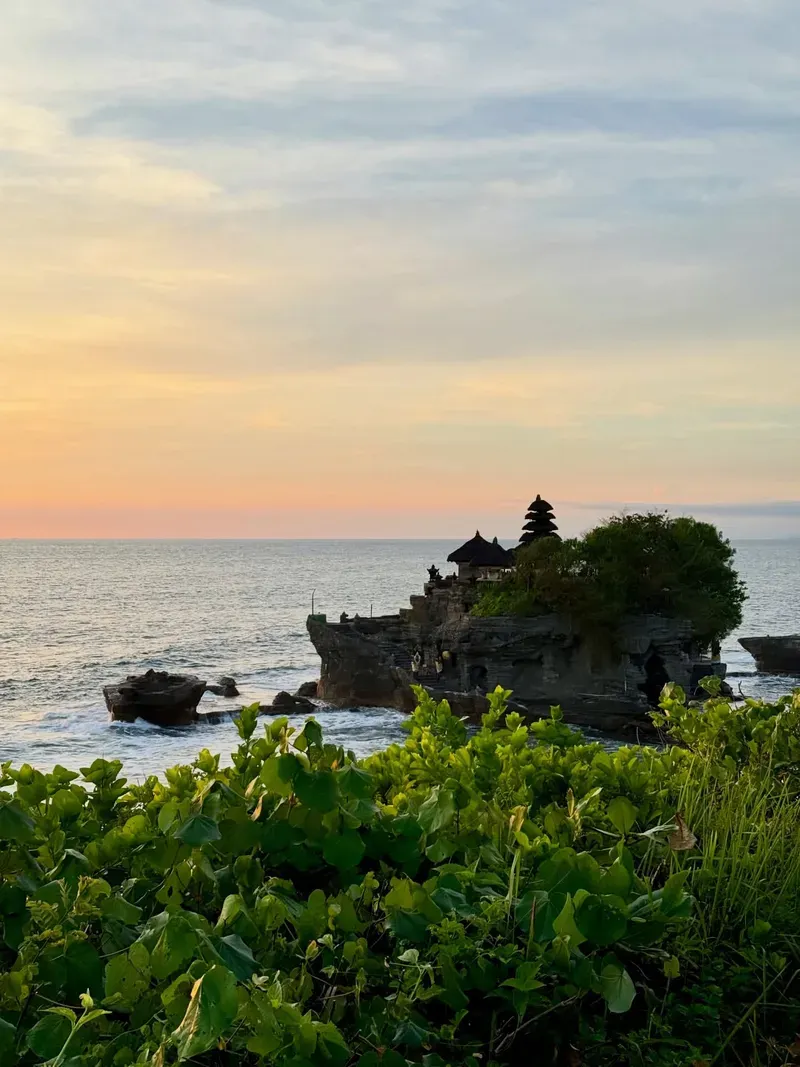
The temple complex occupies a three-hectare footprint of jagged coral and basalt. The primary structure sits 17 meters above sea level, featuring traditional Balinese multi-tiered meru towers constructed from dark palm fiber and black volcanic stone. These pagodas step upward in odd numbers, representing the sacred mountain Mahameru. A natural archway cuts through the neighboring Batu Bolong rock formation, located a five-minute walk to the north along a paved coastal path. This secondary temple provides a different sunset angle and hosts the daily Kecak Fire Dance at 18:00, which costs 100,000 IDR to attend.
Directly beneath the main temple rock, a natural freshwater spring flows from the coral. The Tirta Pabersihan fountain produces clean, drinkable water despite sitting mere meters from the salty Indian Ocean. Priests station themselves at this spring during low tide, sprinkling the fresh water over the heads of visitors in a traditional blessing ritual in exchange for a small donation. A small cave at the base houses banded sea kraits, highly venomous black-and-white striped snakes. Local keepers monitor these reptiles and display them to the public, ensuring visitors maintain a safe distance from the fangs.
The surrounding grounds consist of paved viewing terraces built into the southern cliffs. These pathways provide wheelchair access to the upper viewpoints, though the sandy beach and rocky temple base remain completely inaccessible to mobility devices. An extensive art market, known as Pasar Seni, occupies the space between the parking area and the main entrance gate. Vendors sell wood carvings, sarongs, and jewelry, often marking up initial prices by 50 percent or more. Haggle firmly but politely to secure a fair price.
Heat radiates off the exposed stone during the afternoon, and the lack of shade makes the 15-minute walk from the parking area physically demanding. Bring water and wear non-slip shoes, as the algae-covered rocks near the spring cause frequent falls. The viewing terraces feature several small cafes serving cold Bintang beer and fresh coconuts. Grab a seat at one of these cliffside tables by 16:30 to guarantee an unobstructed view of the sun dropping behind the temple towers.
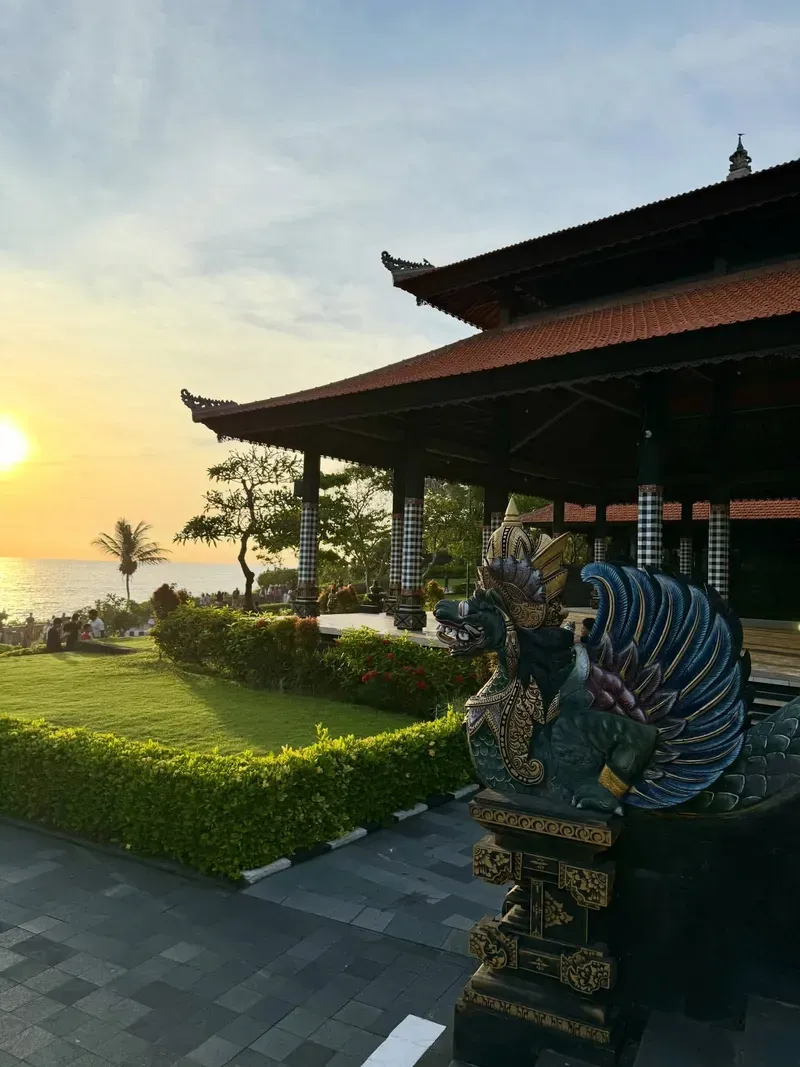
Tanah Lot forms a vital link in a spiritual chain of seven sea temples guarding the Balinese coastline. Each temple is positioned within eyesight of the next, creating a continuous barrier against evil spirits emerging from the deep ocean. Local theology dictates that the sea gods require constant appeasement to prevent storms and poor fishing harvests. Worshippers bring woven palm-leaf baskets filled with flowers, crackers, and burning incense, placing them at the base of the rock before the tide washes them away.
A persistent local myth, known as the Tanah Lot Curse, surrounds the site. Legend states that unmarried couples who visit the temple together will break up shortly after their trip. Thousands of couples still walk the grounds daily, ignoring the superstition to photograph the sunset. The inner sanctum of the temple enforces strict religious boundaries that separate tourists from worshippers. Security guards monitor the stone staircase leading up the rock, turning away anyone without specific ceremonial purpose.
Tourists cannot enter the upper courtyards, which remain locked and reserved exclusively for Balinese Hindus. Traditional law also requests that menstruating women refrain from entering the immediate temple grounds, a rule applied across all sacred sites in Bali. Visitors must wear modest clothing covering their shoulders and knees. Local vendors rent sarongs near the entrance gate for 10,000 IDR, though wearing one is not strictly mandatory for walking the outer park paths. The site demands respect as an active religious center, not just a photographic backdrop.
The temple's influence extends beyond its immediate grounds. The nearby Taman Ayun Temple, a 45-minute drive inland, shares historical ties with Tanah Lot through the Mengwi Kingdom. Royal families historically funded the maintenance of both sites, linking the agricultural prosperity of the inland rice terraces to the spiritual protection of the coastal shrines. Hire a driver to visit Taman Ayun in the morning before heading to the coast for the afternoon low tide.
Approximately 33 percent of the rock base is artificial concrete added during a 1980s Japanese-funded restoration.
Banded sea kraits live in a cave at the base of the rock and act as the temple's spiritual protectors.
A natural freshwater spring flows directly beneath the saltwater-surrounded rock, providing holy water for blessings.
Local superstition claims that unmarried couples who visit the temple together will end their relationship shortly after.
The temple becomes completely inaccessible by foot during high tide when the ocean submerges the 20-meter land bridge.
A traditional Kecak Fire Dance takes place every evening at 18:00 near the neighboring Batu Bolong rock formation.
Tourists are strictly forbidden from entering the upper courtyards, which remain locked and reserved for Balinese Hindu worshippers.
No, the inner sanctum is strictly reserved for Balinese Hindu worshippers. Tourists can only explore the outer grounds, the viewing terraces, and the base of the rock during low tide.
Sunset typically occurs between 18:15 and 18:45. Arrive by 16:00 to secure a viewing spot and avoid the heavy late-afternoon traffic on the roads from Canggu and Seminyak.
The water at the Tirta Pabersihan spring is naturally fresh. It flows directly from the rock despite being completely surrounded by the salty Indian Ocean.
You can view the temple from the shore and cliff terraces during high tide. You cannot walk across the sand to the base of the rock, as the ocean completely submerges the path.
The entrance fee is 75,000 IDR for foreign adults. You must pay this fee in cash at the main ticket booth, as cards and digital payments are not accepted.
A Kecak Fire Dance is performed daily at 18:00 near the Batu Bolong Temple, a five-minute walk from the main site. Tickets for the dance cost approximately 100,000 IDR.
A sarong is not strictly mandatory for the outer park area, but modest dress is required. Your shoulders and knees must be covered to show respect for the active religious site.
Tickets currently must be purchased in person at the entrance booth. Bring small denominations of Indonesian Rupiah to pay for entry, parking, and market souvenirs.
The temple itself is ancient, but the rock base is heavily modified. Approximately one-third of the formation is artificial concrete added during a 1980s restoration to prevent the structure from collapsing.
The banded sea kraits are highly venomous but generally docile. Local keepers handle them, and visitors can view them safely from a distance in a small cave at the base of the rock.
Browse verified tours with free cancellation and instant confirmation.
Find Tours